Chapter Text
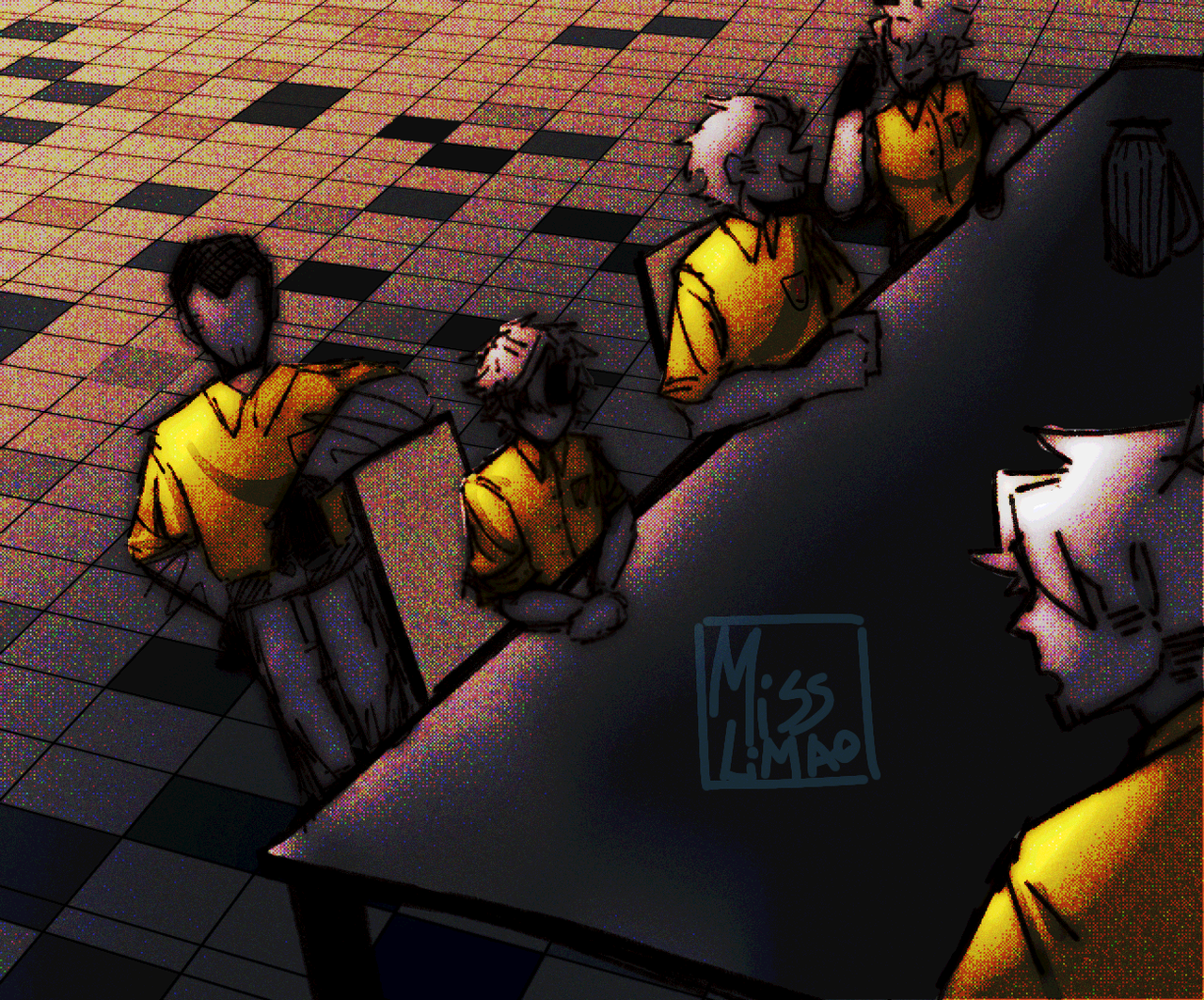
The break room smelled faintly of coffee that had been reheated too many times.
Kid sat at the edge of a plastic chair, elbows resting on his knees, staring down at his hands as if they still belonged to someone else. They felt heavier now. Not injured, not sore exactly, just… unfamiliar. Like they had already learned something his mind hadn’t caught up with yet.
His break was over.
First day. January 4th, 1995.
He remembered the date because it had cost him something to get here. Christmas had passed in a blur of lines, signatures, offices that smelled like paper and impatience. New Year’s had come and gone somewhere between documents and deadlines. While everyone else celebrated, he had been running. Always running. After approvals, after stamps, after a chance.
And now he was here.
Playtime Co.
The name had sounded lighter before he arrived. Almost ridiculous, even. Like something out of a commercial you forget as soon as it ends. But the place itself… it wasn’t light at all.
It was massive.
Not just big in the way buildings usually are, but sprawling. The kind of place that felt like it had grown instead of being built. Kid had needed two buses just to get close, and even then, there had been a stretch of road he had to walk alone, the factory rising in the distance like something waiting.
Even now, inside it, he wasn’t sure he had seen all of it. He doubted anyone had.
Voices pulled him back.
A few of the other new hires were still scattered around the room, talking in low, tired bursts. Nervous laughter, mostly. The kind people use when they’re trying to convince themselves they’re not overwhelmed.
“…told you it’d be easy,” someone muttered, though it didn’t sound convincing.
“Easy?” another replied. “Did you see that thing?”
They didn’t need to say what thing.
The GrabPack.
Kid flexed his fingers again, almost unconsciously, as if expecting the red and blue hands to still be attached. The training had been… rough. Not impossible, but not intuitive either. It demanded timing, coordination, a strange kind of confidence. Like it expected you to trust it before you even understood it.
He had fumbled more than once.
Avery had laughed, not unkindly.
“You’ll get it,” he’d said, easygoing, like this was all normal. Like everyone struggled at first and then just… adapted. “First day’s always the worst.”
Kid wasn’t sure if that was reassuring.
Across the room, someone said, “Hey—Kid, you heading back?”
The name landed on him like it always had.
Kid.
It had started almost immediately. No one had asked for his real name. Not once. Not during introductions, not during training, not even on the paperwork that had taken him weeks to gather. Someone had just looked at him, noticed his age, the way he kept quiet, and decided.
And everyone else followed.
Kid.
He didn’t correct them.
Maybe because it was easier. Maybe because it didn’t feel like it mattered here.
Or maybe because, somehow, the place had already decided that for him.
“Yeah,” he answered, pushing himself up from the chair.
His voice sounded smaller than the room.
They moved out together, a loose group of new workers drifting back into the corridor. The moment the break room door swung shut behind them, the sound of the factory rushed back in.
Machines.
Metal.
Movement.
But underneath it—
That same rhythm.
Kid paused for half a second.
There it was again. Not loud, not obvious. Just… present. A low, steady pulse woven into the noise, like something alive trying to stay unnoticed.
He shook it off and kept walking.
The hallways stretched on longer than he expected, lined with pipes, wires, and faded signs that pointed in too many directions. Some flickered under tired fluorescent lights. Others looked like they hadn’t been touched in years.
“Don’t get lost,” Avery said from beside him, glancing over with a half-smile. “Seriously. It’s easier than you think.”
“People do?” one of the new hires asked.
Avery hesitated.
“Not… exactly,” he said. “Just—stick with someone your first week.”
That didn’t answer the question.
Up ahead, a familiar figure stood waiting near the loading area.
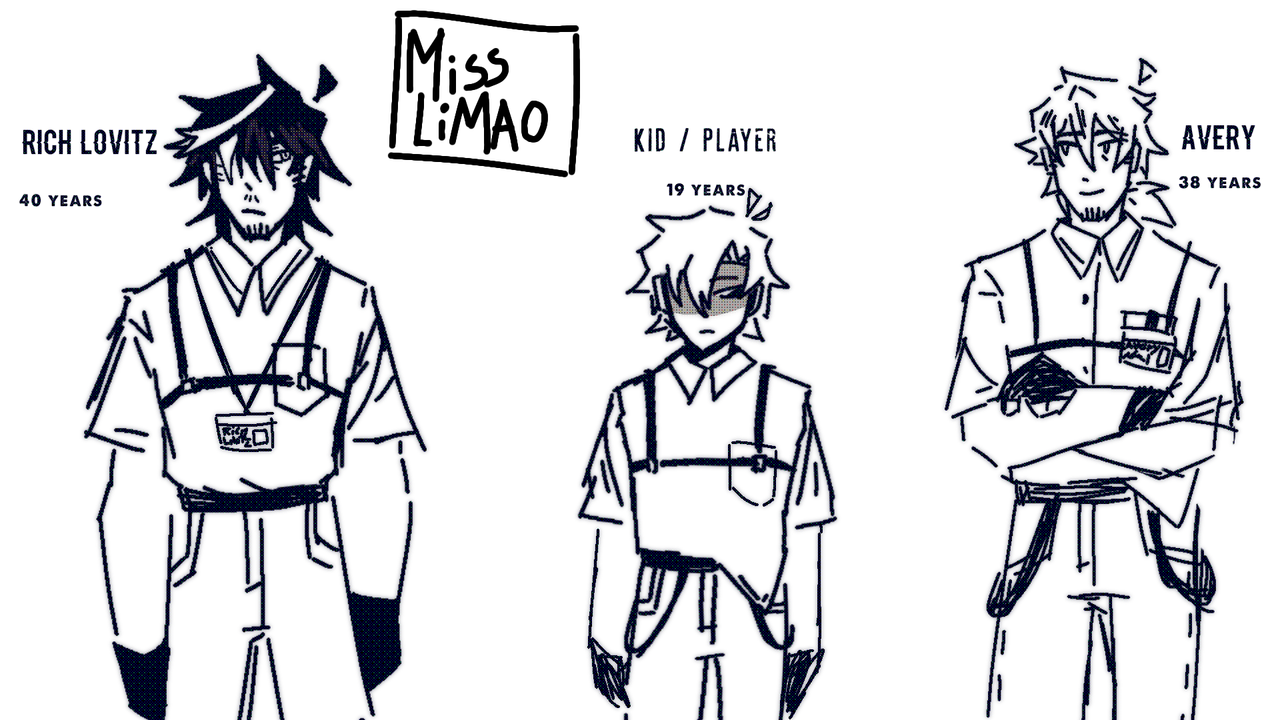
Rich Lovitz.
Even from a distance, he looked like he hadn’t slept enough. His posture was straight, his presence solid, but there was a tension in him that didn’t quite go away. Like a wire pulled just a little too tight.
“Break’s over,” Rich called out as they approached. “If you’re still breathing, you’re working.”
A couple of the workers chuckled. Nervous, again.
Rich’s eyes moved over the group, quick and assessing. When they landed on Kid, they lingered for just a second longer.
Not unkind. Just… measuring.
“You,” he said, gesturing with a tilt of his head. “Kid.”
The name again. Firm. Decided.
Kid stepped forward without thinking.
“How’s the GrabPack treating you?” Rich asked.
Kid hesitated. There were a dozen answers he could’ve given. None of them felt right.
“I’m… getting used to it.”
Rich studied him for a moment, then gave a short nod.
“Good. You don’t have to like it,” he said. “Just don’t fight it. That’s when people mess up.”
There was something in the way he said it that made the words stick.
Don’t fight it.
Behind them, something heavy shifted. A crate being moved, maybe. Or something inside one.
Kid glanced toward the sound.
Rows of boxes stretched across the loading area, stacked higher than he expected. Some were labeled clearly. Others… weren’t. A few had markings that looked smudged, like they had been changed more than once.
For a brief second, he thought he saw one of them move.
Not being carried.
Not pushed.
Just… adjusting.
He blinked.
It was still.
“Eyes forward,” Rich said sharply, not raising his voice but somehow cutting through everything else. “You’ve got time to stare later. Right now, you work.”
Kid looked back at him.
“…Yes, sir.”
Rich didn’t react to the hesitation, just turned and motioned for them to follow.
“Come on. We’ve got a schedule to keep.”
As they moved deeper into the loading area, the noise swallowed them again.
Machines roared. Metal clanged. Voices echoed and disappeared.
And beneath it all—
That same steady, patient rhythm.
Kid didn’t know it yet.
But the factory had already noticed him.
The work settled into a rhythm faster than Kid expected.
Not a comfortable one. Not natural. But something his body began to follow anyway.
Lift. Aim. Fire. Pull.
The GrabPack’s mechanical whir clicked in time with the conveyor belts, its cables snapping forward and retracting with a precision that demanded attention. Kid adjusted his stance, trying to mimic the way Avery had shown him earlier—less force, more control.
It worked.
The crate slid cleanly into place on the cart.
For a brief second, something like relief flickered through him.
“See? Not that hard.”
Avery’s voice still lingered in his head, even though he wasn’t there anymore.
He had stepped away a few minutes ago, glancing over the floor with mild annoyance.
“Gonna check on the others,” he had said, rubbing the back of his neck. “Some of them… I swear, they’re adults, but you wouldn’t know it.”
A small sigh, half tired, half amused.
Then he was gone.
Rich had disappeared not long after, called over by a man in a suit who looked like he didn’t belong anywhere near the loading area. Clean shoes. Sharp lines. The kind of presence that made the noise of the factory feel… staged.
Probably paperwork. Signatures. Approvals.
Things above Kid’s level.
So now it was just him.
And the work.
Lift. Aim. Fire. Pull.
Again.
Again.
The cart beside him was slowly filling, crates stacking into something stable, predictable. Manageable.
Until it wasn’t.
The GrabPack misfired—not completely, just enough.
The blue hand clipped the edge of a box instead of catching it cleanly. The crate tipped, wobbled in that suspended, fragile way—
—and fell.
The sound wasn’t loud.
But it felt like it shouldn’t have happened.
Kid froze for half a second, then exhaled sharply, frustration tightening in his chest.
“…Damn it,” he muttered under his breath
He stepped forward quickly, crouching beside the fallen crate. His hands hovered over it for a moment before he actually touched it, like he expected something to react.
Nothing did.
It was just a box.
Right?
He lifted it slightly, turning it just enough to check the corners. No visible damage. No cracks, no breaks. Still sealed.
Kid hesitated.
Maybe he should check inside.
Just to make sure.
If something broke, if there was a defect—wouldn’t that matter? Wouldn’t that be part of the job?
His fingers moved toward the edge of the lid—
—and something grabbed his wrist.
Hard.
Kid flinched, the reaction immediate, his breath catching as he turned.
“What are you doing?”
The voice was sharp. Not loud, but cutting.
The man holding him didn’t look like the others. His uniform was cleaner, less worn. His grip didn’t loosen.
Kid blinked, trying to process, words stumbling over each other as he spoke.
“I—I just dropped it, I was going to check if there was any—”
“You don’t open it.”
The interruption was instant.
Cold.
Final.
Kid frowned slightly, confusion slipping through the initial shock.
“I just thought if something got damaged, I should—”
“It’s not your job to think.”
The man’s grip tightened just enough to make the point clear.
“You move the boxes. That’s it. Whatever’s inside has nothing to do with you.”
Kid stared at him.
Nothing to do with him?
For a second, that didn’t make sense.
“…It’s just toys,” he said, almost to himself, like saying it out loud would make the situation make sense again.
For the first time, something flickered across the man’s expression.
Not anger.
Something sharper.
His grip tightened again.
“Is that what you think?”
Kid felt his stomach drop.
“I—”
“Because what’s inside that crate,” the man continued, voice lowering just slightly, “has nothing to do with you.”
The words didn’t rise.
They pressed.
“You don’t ask about it. You don’t check it. You don’t touch it unless you’re told.”
Kid’s breathing had gone uneven without him noticing. His pulse was loud in his ears now, drowning out the machines, drowning out everything.
“I didn’t know,” he said, quieter, the panic slipping into something closer to fear. “No one told me—”
“Then you learn.”
The silence between them stretched, tight and suffocating.
Kid swallowed, his voice coming out smaller than he intended.
“…Can you let go?”
For a second, nothing happened.
The man just looked at him.
Then—
“Hey.”
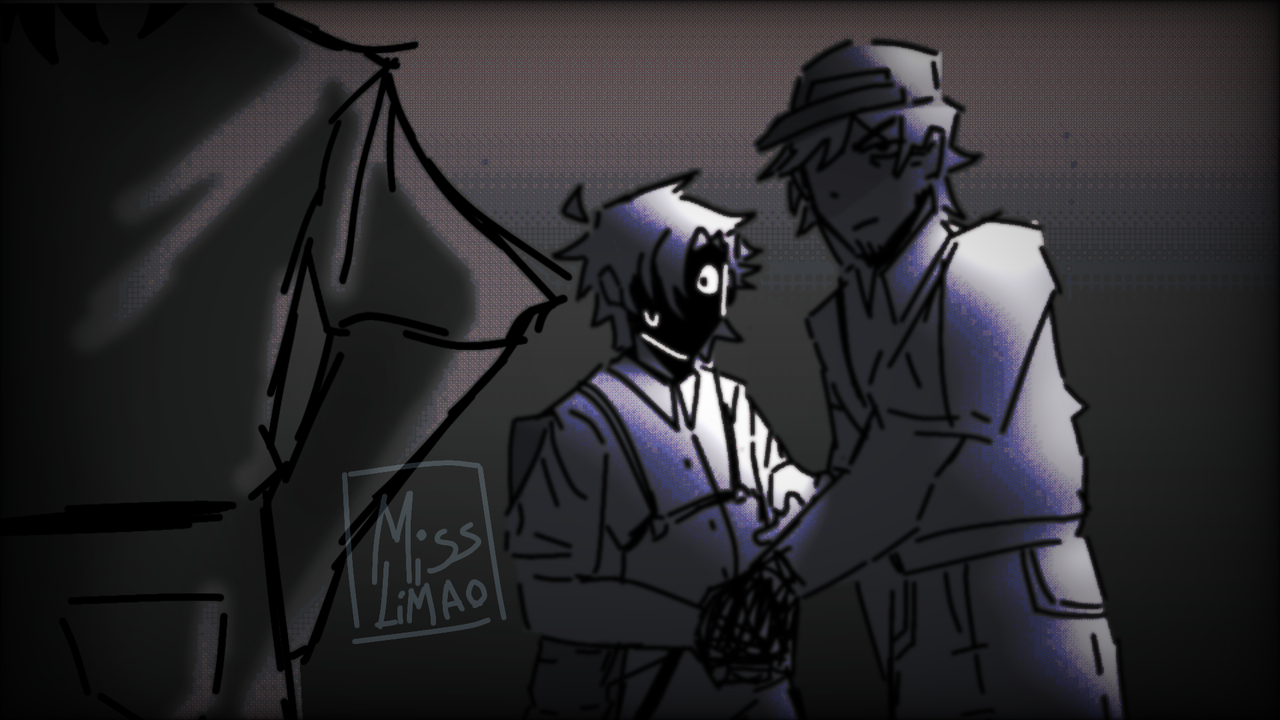
Rich’s voice cut in, low but solid.
“Let go of him.”
The tension shifted instantly.
The man didn’t release Kid right away, but his attention flicked toward Rich, irritation flashing across his face.
“He was about to open a crate.”
“He’s new,” Rich replied, stepping closer. Not aggressive, not loud—just there. “First day.”
A pause.
Then, slowly, the man let go.
Kid pulled his hand back without thinking, the spot where he’d been grabbed still tingling.
“Keep your people in line,” the man said, his tone flattening into something quieter. Sharper. “Or it becomes a problem.”
It didn’t sound like a suggestion.
Rich held his gaze.
“Noted.”
Another pause. Heavy. Measuring.
Then the man turned and walked off without another word, disappearing into the maze of machinery and movement like he had never been there at all.
For a moment, the noise of the factory rushed back in to fill the space he left behind.
Kid exhaled slowly, flexing his wrist.
“…What was that?”
Rich didn’t answer immediately. He crouched down beside the crate instead, checking it with quick, practiced movements before lifting it back onto the cart like nothing had happened.
“They’re like that,” he said finally. “Don’t take it personally.”
Kid hesitated.
“…Who are they?”
Rich adjusted the position of the box, making sure it sat properly before straightening up.
“Supervisors,” he said.
Kid blinked.
“Supervisors of what?”
That earned the smallest pause so far.
Rich glanced in the direction the man had gone, then back at the crates.
“…I don’t know.”
It wasn’t said like a joke.
He reached for the next box, grabbing it with his own GrabPack in one smooth motion.
“Just don’t open anything,” Rich added, not looking at him. “You see damage, you report it. You don’t check it yourself.”
Kid nodded, even though the answer didn’t settle anything.
“Right.”
They worked in silence for a while after that.
Lift. Aim. Fire. Pull.
The rhythm returned.
But something about it had changed.
As Kid reached for the next crate, his eyes flicked briefly to the one he had dropped earlier.
For a second—
just a second—
he thought he felt warmth through the metal casing of the GrabPack’s hand as it brushed against it.
Not heat.
Not exactly.
Just… not cold.
He didn’t mention it.
And the work continued.
They kept working after that.
No more interruptions. No more supervisors appearing out of nowhere. Just the steady, grinding rhythm of the loading area swallowing everything back into place as if nothing had happened.
Lift. Aim. Fire. Pull.
Rich didn’t bring it up again.
Kid thought he might. Expected it, even. A warning, maybe. Or a joke to ease the tension. But nothing came. Just work.
Crate after crate.
The cart filled. Then another. Then another.
At some point, Rich spoke.
“You get used to it.”
Kid glanced at him, not entirely sure what he meant this time.
“The work?” he asked.
Rich let out a quiet breath, adjusting a box with more care than necessary.
“…The place.”
That wasn’t an answer.
Kid waited, but Rich kept going anyway, like he hadn’t been asked a question in the first place.
“This factory,” he said, his tone flattening into something almost thoughtful, “it’s not what it looks like from the outside.”
Kid frowned slightly.
From the outside, it had looked like opportunity. Big, successful, busy. The kind of place people talked about like it meant something.
“What does that mean?” he asked.
Rich gave a short, humorless huff.
“It means don’t try to understand everything at once,” he said. “You’ll just end up asking the wrong questions.”
Kid didn’t like the way that sounded.
“…And if I do?”
That made Rich glance at him, properly this time.
For a moment, he looked like he was deciding how honest to be.
“If something bothers you,” he said, more measured now, “you come to me. Or Avery. You don’t go wandering around, you don’t go digging into things that aren’t yours.”
A pause.
“People who do that don’t last long here.”
The words didn’t carry threat.
Just… certainty.
Kid nodded slowly.
“Okay.”
Silence settled again, but it felt different now. Thicker. Like something had been said that couldn’t be taken back, even if it hadn’t been explained.
After a while, Kid spoke again.
“…You don’t leave?”
Rich raised an eyebrow slightly.
“At the end of the shift,” Kid clarified. “You’re still here.”
Rich followed his gaze toward the rows of crates waiting to be moved, then toward the far end of the loading area where more were already being brought in.
“Someone’s gotta make sure this gets where it’s supposed to,” he said. “And someone’s gotta be here when it’s picked up.”
He grabbed another crate, pulling it into place with practiced ease.
“I leave when it’s done. Not when the clock says I can.”
Kid was getting better at it. Not good, not yet—but the movements didn’t feel as foreign anymore. His hands followed the rhythm without needing to think through every step.
Rich noticed.
“Less clumsy,” he said, not looking at him. “That’s progress.”
Kid let out a small breath, almost a laugh.
“I dropped one like five minutes ago.”
“Yeah,” Rich shrugged. “And you didn’t panic this time.”
That wasn’t entirely true.
Kid adjusted a crate on the cart, more carefully than necessary.
“…That guy,” he said after a moment. “The supervisor.”
Rich didn’t react immediately. He pulled another box into place, lining it up with the others like he was more focused on the angles than the conversation.
“What about him?”
Kid hesitated.
“I just—” he paused, searching for the right words. “I thought I was supposed to check if something got damaged.”
“You report it,” Rich corrected. “You don’t open it.”
“But why?”
That made Rich stop.
Not fully—just enough that the movement of the GrabPack slowed, the cable hanging for a second before retracting.
Kid noticed.
“…It’s just toys, right?” he added.
There it was.
The question that sounded simple.
Rich let out a quiet exhale through his nose, like he’d heard that one before.
“That’s what they sell,” he said.
Kid frowned slightly.
“That’s not what I asked.”
A beat.
Rich glanced at him, then away again, like he was checking who else might be listening—even though no one was close enough to hear over the machines.
“Look,” he said, voice lower now, “this place runs on departments. You’ve got manufacturing, design, testing, shipping… all separate.”
“Okay…”
“And each one only knows what it needs to know.”
Kid shifted his weight.
“So we just… don’t know?”
Rich gave a small, humorless smile.
“Now you’re getting it.”
Kid didn’t smile back.
They worked for a few seconds in silence again. Another crate. Another pull. Another precise movement.
But the question didn’t leave.
“…You’ve been here a while,” Kid said.
“Long enough.”
“And you never checked?”
That earned him a look.
Not angry.
Just… sharper.
“You think I didn’t try?”
Kid blinked.
Rich shook his head lightly, like he was brushing the thought away before it could settle.
“First month,” he went on, tone drifting into something more distant, “everyone thinks they’re smarter than the rules. That they’ll just take a quick look, figure things out.”
He grabbed a crate a little harder than necessary this time.
“Doesn’t go that way.”
Kid felt something tighten in his chest.
“…What happens?”
Rich didn’t answer right away.
Instead, he adjusted the crate on the cart, slower this time, more deliberate.
“When something isn’t your job,” he said finally, “this place has a way of reminding you.”
That wasn’t an explanation.
Kid swallowed.
“That doesn’t really answer anything.”
“No,” Rich agreed. “It doesn’t.”
Another pause.
Then, softer:
“But it’s the answer you get.”
The machines filled the gap again.
For a moment, Kid considered dropping it.
He didn’t.
“…You said it’s not what it looks like,” he pressed. “The factory.”
Rich let out a quiet breath, almost like a laugh—but there was no humor in it.
“Yeah.”
“What does it look like to you?”
That question lingered longer.
Rich leaned back slightly, flexing his shoulder before reaching for the next crate—but he didn’t grab it right away.
“…Like something that got too big,” he said. “Too fast.”
Kid tilted his head.
“A company?”
“A system,” Rich corrected. “Companies slow down. They hit walls. This one just… kept going.”
He finally fired the GrabPack, pulling the crate in.
“More departments. More sections. More things nobody explains.”
Kid followed the motion with his eyes.
“And no one asks?”
“Oh, people ask,” Rich said. “They just learn when to stop.”
That word again.
Stop.
Kid looked down at his own GrabPack for a second.
“…You said I could come to you,” he said.
“Yeah.”
“If something bothers me.”
Rich nodded once.
“That still stands.”
Kid hesitated.
“…Does it bother you?”
That one landed.
Rich didn’t move for a second.
Then he let out a slow breath, rolling his shoulders like he was physically shaking something off.
“Kid,” he said, quieter now, “you don’t last here by letting everything bother you.”
“That’s not what I asked.”
Rich gave him a sideways glance.
Persistent.
“…Yeah,” he admitted after a moment. “It does.”
The honesty sat between them, heavier than anything else he’d said.
“But you learn to work anyway,” he added. “That’s the job.”
Kid wasn’t sure if that made it better…
or worse.
They went back to work after that.
Lift. Aim. Fire. Pull.
By the time Kid’s shift ended, the factory hadn’t gotten any quieter.
If anything, it felt louder. Or maybe he was just noticing it more now.
Avery found him near the exit corridor, wiping his hands against his pants in a tired, automatic motion.
“First day survived,” Avery said with a small smile. “Not bad.”
Kid gave a faint nod.
Avery gestured for him to follow, walking a little slower than before.
“Alright, quick thing before you go,” he said. “You’ve probably noticed already, but… there are places you shouldn’t be.”
Kid blinked.
“…Shouldn’t be?”
“Yeah,” Avery said, like it was obvious. “Some areas are restricted depending on your department. Loading crew doesn’t need access to most of the inner sections.”
“That makes sense,” Kid admitted.
It didn’t, entirely. But it sounded like it should.
Avery continued, pointing vaguely down a branching hallway.
“Storage zones past Sector C, testing areas, anything marked with red signage—just don’t go there unless someone tells you to.”
Kid glanced in the direction he pointed.
The hallway looked like any other.
Same lights. Same walls.
“…What happens if someone does?” he asked.
Avery hesitated.
Not long. Just enough.
“You won’t,” he said lightly, brushing it off. “Trust me, it’s more trouble than it’s worth.”
That wasn’t really an answer either.
But it was the last one he got.
“Get some rest,” Avery added, stepping back. “Tomorrow’s easier.”
Kid wasn’t sure if he believed that.
The walk out felt longer than it had that morning.
Or maybe just quieter.
The factory behind him didn’t sleep. Even from the outside, Kid could hear it—a distant, constant hum that pressed against the night air like it didn’t belong there.
The sky was already dim, the light fading into that soft gray that made everything look flatter than it should.
As he moved toward the edge of the property, he noticed the cars.
More than before.
Some pulling in.
Some already parked.
Engines still ticking as they cooled.
Kid slowed slightly.
“…Shift change?” he murmured under his breath.
It made sense.
A place this big wouldn’t stop. It couldn’t.
Still—
Something about it felt off.
The timing. The volume. The way the headlights cut through the dim light, one after another, like a quiet procession.
One car in particular caught his attention.
Black.
Cleaner than the others. Polished, almost. It didn’t look like it belonged to someone working the floor.
The door opened.
A man stepped out.
Thin. Neatly dressed. Glasses catching the faint light as he adjusted them. There was nothing immediately strange about him—nothing that would stand out on a normal street, in a normal place.
But this wasn’t normal.
In one hand, he carried a small case.
In the other—
A white lab coat, folded over his arm.
Kid slowed just a little more.
A doctor?
Here?
The man didn’t look toward him. Didn’t acknowledge anything around him, really. He just closed the car door and started walking toward the factory entrance with quiet, practiced steps.
Like he’d done it before.
Like he would do it again.
Kid watched for a second.
Then another.
The thought formed, simple and quiet:
Why would a toy factory need a doctor?
No answer came.
And just as quickly as the thought appeared—
it slipped away.
Kid exhaled, shaking his head lightly.
“…Not my business.”
Rich’s voice echoed faintly in his mind.
You stay out of things that aren’t yours.
Right.
He turned and kept walking.
The factory disappeared behind him piece by piece, swallowed by distance and the thin line of trees at the edge of the property.
Outside, the air felt different.
Colder. Cleaner. Real.
For a moment, Kid just stood there, letting the silence settle into his ears where the noise of the factory had been. It almost felt like stepping out of water.
The building loomed behind him, its size somehow even more noticeable now that he was no longer inside it.
Watching.
He turned away.
The walk to the bus stop took him past the thin stretch of forest that bordered the property. The trees weren’t dense, but they were enough to break the line of sight, enough to make the factory disappear piece by piece as he moved.
Branches shifted slightly in the wind.
Or maybe not.
Kid didn’t look too closely.
The first bus came on time.
It carried him away from the factory and into the city, where things felt normal again—cars, lights, people who didn’t know what Playtime Co. sounded like from the inside.
Then the second bus.
Quieter. Emptier.
By the time he stepped off, the streets were nearly still.
Home wasn’t far.
The house was dark when he entered.
No lights. No sound.
Kid paused in the doorway for a second, listening.
Nothing.
He stepped inside anyway, closing the door behind him with a soft click.
His mother wasn’t home.
Not surprising.
If she wasn’t working late, she was out looking for his father. And if she was looking for him, it usually meant he had found a bar first.
Kid didn’t think about it too much.
He kicked off his shoes, set his things down, and moved through the small space on instinct. Everything felt familiar here. Predictable.
Safe.
Or at least… quieter.
He washed his hands, the motion automatic.
For a brief second, as the water ran over his fingers, he thought about the crate.
The one he dropped.
The one that felt—
He turned off the tap.
Silence again.
Kid exhaled, rubbing his face before heading to his room.
The bed creaked slightly as he sat down, exhaustion settling into him all at once now that there was nothing left to distract from it.
First day.
He made it through.
That had to count for something.
He lay back, staring at the ceiling for a moment before closing his eyes.
The quiet stretched.
But not completely.
Somewhere, in the back of his mind—
faint, distant—
that same rhythm lingered.
Steady.
Patient.
Waiting.
Kid shifted slightly in his bed, half-asleep now.
And for a moment—
it almost felt like he hadn’t left the factory at all.
The corridor cameras didn’t usually notice people.
They watched. Recorded. Existed.
But they didn’t notice.
This one did.
The black car had barely cooled when the man stepped inside the factory, his shoes making quiet, deliberate contact with the polished floor. The hum of the building welcomed him without question, folding him into its rhythm like he had always belonged there.
He didn’t stop at reception.
Didn’t speak to anyone.
Didn’t need to.
The lab coat hung neatly over his arm, the case in his hand held with the kind of care that suggested its contents mattered more than anything around him.
He moved with purpose.
Down one corridor.
Then another.
Deeper.
The lighting shifted slightly the further he went—subtly dimmer, subtly colder. Fewer people. Fewer sounds that belonged to ordinary work.
Until—
He stopped.
A camera was mounted high in the corner, angled perfectly to catch the entire stretch of hallway.
The man looked up.
Not a glance.
Not curiosity.
He looked directly into it.
Still.
Unblinking.
For a moment, nothing happened.
Then—
The feed cut.
Somewhere else in the building, a monitor flickered.
Static crawled across the screen before going dark.
The man behind it leaned back slightly in his chair, exhaling through his nose.
“…Good call,” he muttered.
He reached forward, already moving to wipe the footage.
Not all of it.
Just enough.
If the wrong person reviewed it, they wouldn’t see anything unusual. Just a gap. A glitch. Something easy to ignore.
He hesitated for a fraction of a second before pressing the final key.
If Playtime Co. saw that footage clearly—
They wouldn’t ask questions.
They wouldn’t need to.
And he wouldn’t be around long enough to answer them.
“…Yeah,” he said quietly to himself. “Good choice.”
The man in the corridor kept walking.
Like nothing had happened.
Like something hadn’t just been erased for him.
He passed rows of crates, stacked high and silent, their labels catching the dim light in uneven ways. Some new. Some older. Some marked with codes that didn’t match anything on the standard manifests.
His fingers brushed lightly against one as he walked by.
Not enough to move it.
Just enough to feel it.
He didn’t stop.
Ahead, a door stood slightly ajar—the larger storage room, where most of the outgoing shipments waited before being processed.
He stepped inside.
The space was wide. Open. Heavy with stillness despite the distant noise of the factory bleeding in through the walls.
He moved between the stacks slowly now.
Looking.
Searching.
For a moment, it almost felt like he was alone.
“You’re late.”
The voice came from the side.
Calm.
Unimpressed.
The man stopped.
Then turned.
Rich stood near one of the loading carts, arms loosely crossed, posture relaxed in a way that didn’t quite match the sharpness in his eyes.
He had been waiting.
“…Traffic,” the man replied evenly.
Rich didn’t smile.
“You’re not the kind of person who gets stuck in traffic, Preston.”
So that was his name.
Preston adjusted his glasses slightly, the gesture small, controlled.
“And you’re not the kind of person who waits around for no reason,” he returned. “So let’s not waste time.”
A beat.
Then Rich nodded once.
“Fine.”
The space between them settled into something familiar.
Not friendly.
Not hostile.
Something in between. Something practiced.
“You said you had an update,” Rich said.
Preston stepped a little closer, lowering his voice—not because anyone was nearby, but because it felt necessary anyway.
“I do.”
He set the case down on one of the crates, though he didn’t open it.
“Things are shifting,” he continued. “Faster than expected.”
Rich’s expression didn’t change, but his attention sharpened.
“In what way?”
Preston hesitated—not out of uncertainty, but calculation.
“Leith,” he said finally. “He’s starting to notice patterns.”
Rich’s jaw tightened slightly.
“…What kind of patterns?”
“The kind that don’t exist on paper,” Preston replied. “Missing logs. Inconsistent routes. People being where they shouldn’t be.”
A pause.
“People like you.”
The words hung there.
Heavy.
Rich didn’t react immediately.
“…I’ve been careful.”
“You have,” Preston agreed. “Which is why you’re still here.”
Not reassuring.
Just factual.
Rich looked away for a moment, toward the stacks of crates surrounding them.
“And now?” he asked.
“Now he’s watching closer,” Preston said. “And he’s not the only one.”
Silence pressed in.
The distant hum of machinery felt louder here. Closer.
“…We might need more people,” Preston added.
That made Rich look back at him, sharper this time.
“No.”
Immediate.
Firm.
Preston raised an eyebrow slightly.
“You’re stretched thin.”
“I’m managing.”
“Not for long.”
“I said no.”
The words didn’t rise—but they didn’t bend either.
Rich uncrossed his arms, stepping forward just enough to close some of the distance between them.
“I’m not pulling anyone from my department into this,” he said. “They don’t know anything, and it stays that way.”
Preston studied him for a moment.
“…You trust them that little?”
“I trust them enough to keep them out of it.”
That landed differently.
Preston exhaled quietly.
“Fine,” he said. “But that limits our options.”
“We’ll deal with it.”
Another pause.
Then—
“Did you find out where they’re going?”
Rich didn’t need clarification.
His expression shifted—subtle, but there.
“No,” he said.
Preston frowned slightly.
“You’re in charge of the loading routes.”
“I’m in charge of moving them,” Rich corrected. “Not tracking them.”
“That doesn’t make sense.”
“It does here.”
A beat.
“They cut my access,” Rich added. “Recently.”
Preston’s eyes narrowed behind his glasses.
“…On purpose.”
“Yeah.”
Silence again.
Heavier this time.
“That means they already suspect something,” Preston said.
“Or they’re tightening everything,” Rich replied. “Either way, we’re blind on that end now.”
Preston’s fingers tapped lightly against the case.
Thinking.
Calculating.
Then—
“We don’t have time to wait,” he said.
Rich didn’t argue.
“Agreed.”
Another pause.
Then, quieter:
“…We set it up.”
Preston nodded once.
“Yes.”
Neither of them said with who.
They didn’t need to.
“Soon,” Preston added. “Before Leith decides to stop observing and start acting.”
Rich glanced toward the entrance of the room, then back at the crates.
“…I’ll make sure it happens.”
Preston picked up his case again, adjusting his grip.
“Be careful,” he said.
Rich let out a quiet breath.
“Always am.”
Preston gave a faint, unreadable look—something that might have been doubt.
Then he turned and walked away, disappearing between the stacks just as quietly as he had arrived.
Rich stayed where he was.
For a moment, he didn’t move.
Didn’t reach for another crate.
Didn’t return to the rhythm.
He just stood there, staring at nothing in particular.
Then—
Slowly—
he looked down at one of the boxes beside him.
Unmarked.
Silent.
Untouched.
“…Yeah,” he muttered under his breath.
“Something’s not right.”
And somewhere deeper in the factory—
something kept moving anyway.